
Lot Clearing for a House Site in Maury County, TN
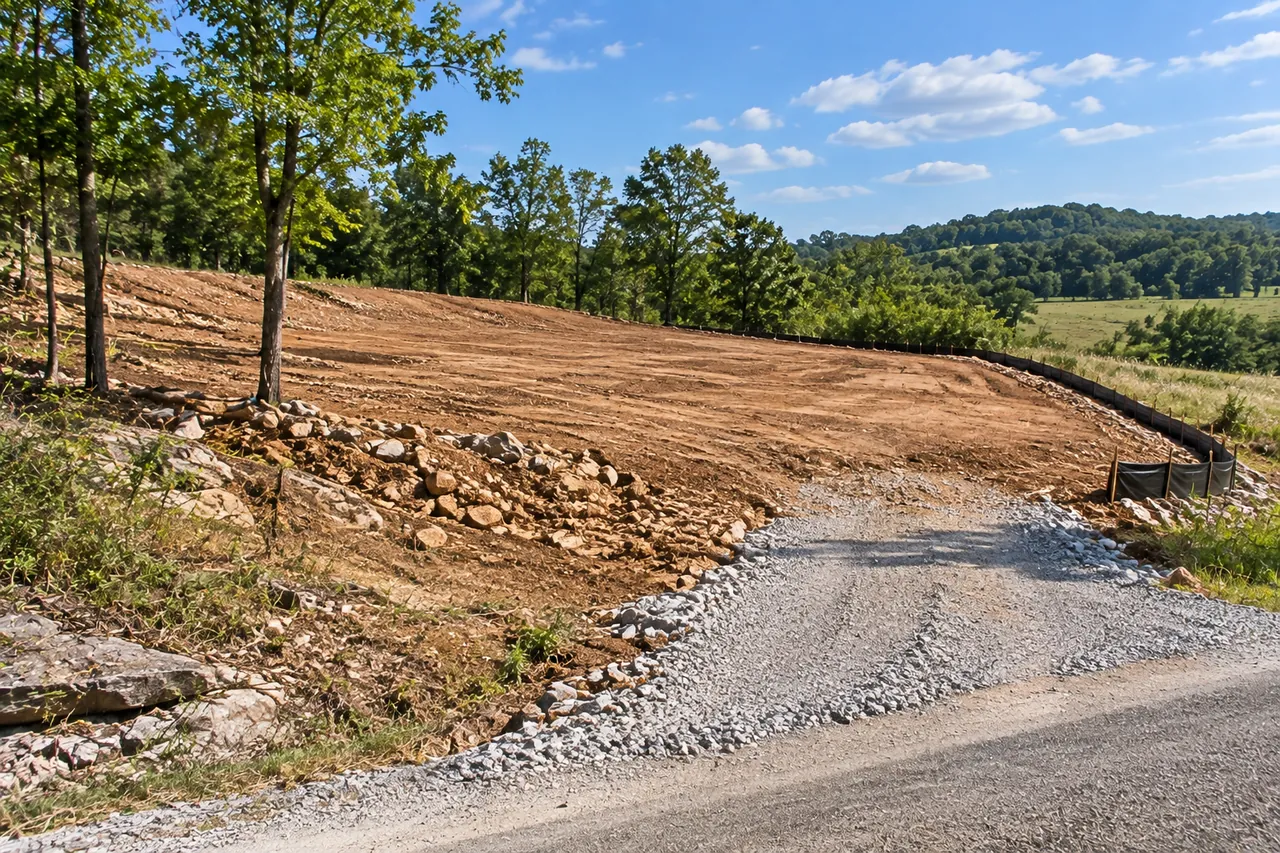
Clearing a lot for a house in Maury County is mostly about doing things in the right order. The septic soils get settled before machines roll, the permits come before the grading, and only the footprint of the house, drive, and work area gets dug out. Here's how that plays out on rocky clay lots outside Columbia, Mount Pleasant, and Spring Hill: septic first, the county's subdivision and steep slope rules, state and city permit lines, sinkholes, the driveway, debris, and cost.
Settle the septic area before anything is cleared
If the house will be on septic, the soil for it decides where everything else goes, and a machine parked or pushed across it can ruin it. TDEC's septic FAQ (updated July 21, 2026) sets the order. You apply online, and an Environmental Scientist does a site evaluation to decide what system the lot needs, sometimes asking for a soils map from a private licensed soil consultant. Before that visit, mark the property lines and house site and mow or bush hog, but "soil disturbance, cutting and filling should not take place as part of this process." Processing "can take up to 45 days from receipt of a complete application." So on a septic lot, the first machine on site is a mower, not a dozer. The TDEC Columbia Environmental Field Office, (931) 380-3371, handles septic for Maury County.
In new subdivisions, the county's subdivision regulations (revised November 24, 2025) put the septic areas on the plat, and if those soil areas "are disturbed or encroached upon," owners and builders must get additional TDEC approvals before a building permit or certificate of occupancy. Once the septic areas are set, flag them and keep machines, piles, and burn piles off them.
Two county rules: subdivisions and steep slopes
Land being subdivided. Section 2-103.1(2) of the subdivision regulations says that before final approval of a preliminary plat and construction drawings, "no clearing of trees (with the exception of those required to facilitate surveying activities) or site grading in any form shall be undertaken." A lot in a subdivision still under review shouldn't be cleared yet.
Steep ground. The county's zoning ordinance (effective January 1, 2026) has Steep Slope Standards in Section 5.6 that cover "all land disturbing activity" on steep slopes, hilltops, and ridgetops. A 25 percent slope climbs 25 feet for every 100 feet across.
- 15 to 25 percent: inside a building envelope, "an engineered site plan shall be required," and drives should follow the contour as far as practicable.
- Over 25 percent: "clearing, excavation, grading, construction" and other land disturbance are prohibited, except non-motorized trails, and driveways and minor utilities. On slopes of 25 to 50 percent, driveways and minor utilities need a geotechnical study, and no driveway or minor utility may cross a slope over 50 percent.
- Exempt: isolated steep areas under 10,000 square feet, counting the whole connected steep area across lot lines.
Before clearing a hillside or ridgetop lot, call Maury County Building & Zoning, 931-375-3002, and ask whether your lot also needs a grading permit.
State and city permits
State. Construction involving "clearing, grading or excavation" that disturbs an acre or more needs coverage under TDEC's Construction General Permit, and a house counts even on a farm. TDEC's page says the 2021 permit was set to expire September 30, 2026, with a new permit planned for October 1, 2026. TDEC's erosion control handbook (January 2026) says the permit requires stream buffers averaging 30 feet, and 60 feet on Exceptional Tennessee Waters such as the Duck River's scenic segments.
- Columbia. A Land Disturbance Permit is required at one acre or for "ten thousand (10,000) square feet or more of additional impervious surface" (stormwater regulations); the fee schedule lists $500 plus $200 per acre for plan review and inspection. Outside single-family lots of an acre or less, trees generally come out only under an approved plan or permit. Development Services: 931-560-1560.
- Mount Pleasant. The city has posted a stormwater ordinance requiring a permit and plan from 10,000 square feet, but the posted copy shows no adoption date. Confirm with City Hall, (931) 379-7717.
- Spring Hill. The land disturbance application says "The grading permit includes one water test within the Fee Total ($100.00)," with no size threshold stated. Ask Development Services, (931) 451-0904.
Sinkholes and rock
Under TDEC's karst guidance, a sinkhole on property developed "in a manner that will cause water flowing to the sinkhole to be altered" is regulated as a Class V injection well, and those are prohibited without authorization. Don't fill one, push debris into one, or aim roof drains or driveway runoff at one until you've asked the Columbia field office.
The common soils are a thin silt loam over sticky reddish-brown clay with chert and limestone slabs, and rock ledges are often close to the surface. Rock that close can slow digging for footings and septic lines, so ask how a quote handles it. On the Highland Rim hills toward Mount Pleasant and Hampshire, lots are steeper and the ground is gravelly chert.
The driveway and the debris
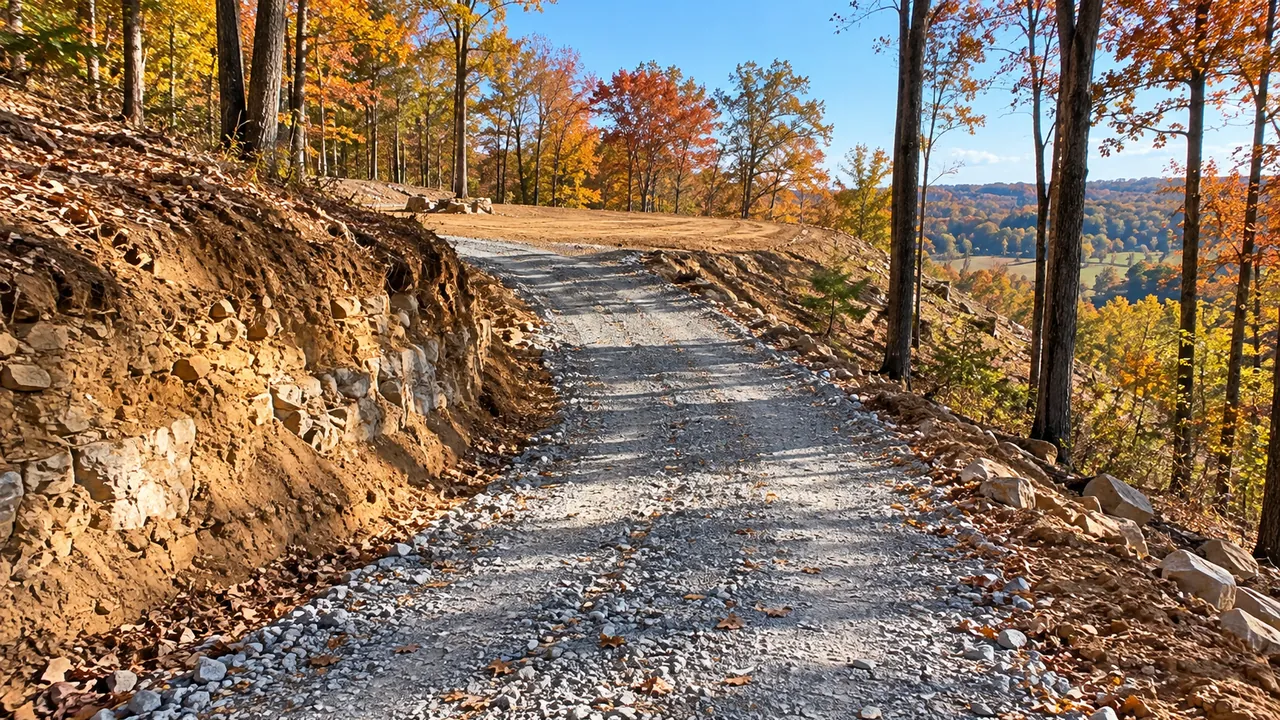
Driveway. If the drive meets a county road, ask the Maury County Highway Department (931-375-6202) what it needs; inside a city, ask the city. Grading and digging need a Tennessee 811 ticket at least three, but not more than ten, working days ahead (811 or 800-351-1111), homeowners included.
Debris. Stumps and brush get mulched, ground, hauled, or burned. In the county, a free Division of Forestry permit is required from October 15 through May 15 for fires within 500 feet of woods or grassland. Columbia's land-clearing burn exception is for agricultural, forest, or game management purposes, so ask Columbia Fire & Rescue (931-560-1700) before planning to burn on a house lot. Spring Hill's burn pages say land clearing fires are prohibited and construction debris must be hauled off. The permits guide has each rule.
What clearing a house site costs
Angi's September 2026 guide puts the national average clearing job at $3,778, with most homeowners paying $1,396 to $6,174, and an acre at $500 to $2,000 lightly forested or $3,600 to $5,600 densely forested. HomeAdvisor's June 2026 land clearing guide puts a heavily forested quarter acre at $750 to $1,400, and a lightly wooded one at $125 to $500. Rock, slope, stumps dug out, debris, silt fence, seeding, and city fees add to those on a Maury County lot. Use them as national yardsticks only. Your lot's real price is the one a contractor puts in writing after walking it. The cost guide has more.
House site questions
How much of the lot should be cleared?
The house footprint, working room around it, the drive, and access to the septic area, and not much more. Walk it with your builder first. Every tree left standing is one less to pay for and less bare ground to keep from washing.
Mulch or dig out the stumps?
Both, in different places. Dig out stumps under the house, drive, and anything else you'll build on. Mulch the rest and leave those roots to hold the ground. Stump grinding explains the difference.
Do I need a permit outside the city limits?
At an acre or more of construction, or less if the lot is part of a larger subdivision or common plan of development, yes: TDEC's Construction General Permit. On steep ground, the county's slope standards apply. Either way, Building & Zoning (931-375-3002) can confirm what your lot needs.
There's a sinkhole on the lot. What now?
Leave it alone until you've talked to the TDEC Columbia Environmental Field Office, (931) 380-3371. Keep the house, septic field, and runoff away from it.
How we help
Let us know where the lot is, about how big it is, and whether the house and septic spots are settled yet. We'll hand that to one independent contractor who does house-site work near you. They'll walk the lot and quote it, and it's your call whether to go ahead. There's no charge for the referral.
Want a local contractor to walk your land?
Call or send a short request. There's no charge for the referral.