
Land Clearing Cost in Maury County, TN
What does land clearing cost in Maury County? Published national guides run from a few hundred dollars an acre for light mulching to several thousand for dense woods that get dug out. Where your land lands has less to do with the acreage than with what's on it: how thick the cedar is, how much limestone is in the way, how steep it is, whether stumps come out, and where the debris can go. Here are the published figures with their dates, what moves a job here up or down, and how to compare quotes.
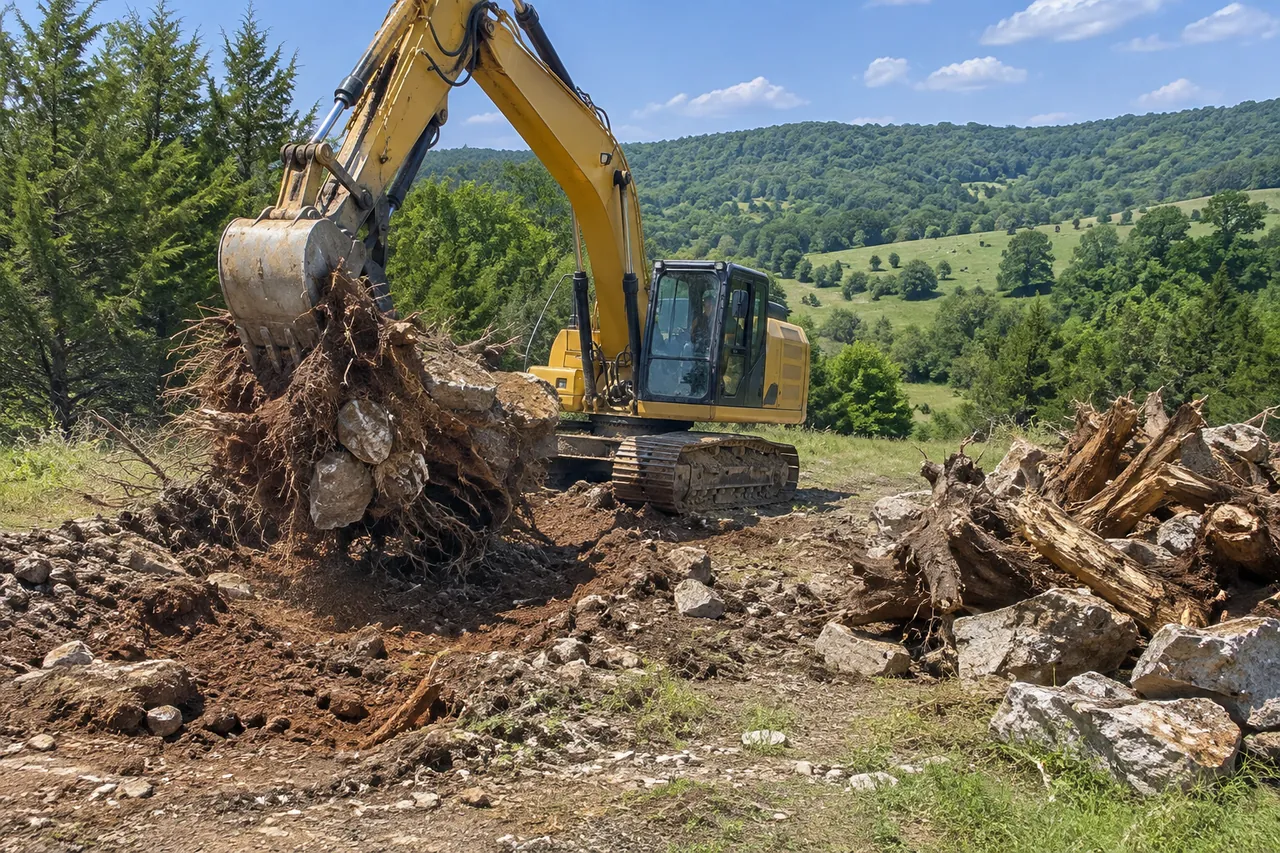
Published price ranges
These are national figures from the guides named, with the date each one shows. None is a Maury County price, and Angi's state-by-state table doesn't include a Tennessee row. The ranges disagree with each other, which tells you how much the land itself matters.
| Job | Published figure | Source |
|---|---|---|
| Typical clearing project, national | $3,778 on average; most fall between $1,396 and $6,174 | Angi, Sept. 2026 |
| An acre of light woods | $500 to $2,000 | Angi, Sept. 2026 |
| An acre of dense woods | $3,600 to $5,600 | Angi, Sept. 2026 |
| A quarter-acre lot | Lightly wooded $125 to $500; heavily forested $750 to $1,400 | HomeAdvisor, June 2026 |
| Hourly rate for clearing work | $110 to $250 | Angi, Sept. 2026 |
| Mulching, cost per acre | $400 to $1,500 | HomeAdvisor, June 2026 |
| Mulching, per acre | $1,000 to $2,500 | Angi, May 2026 |
| Mulching, hourly by density | Heavy, dense brush $200 to $400; underbrush $125 to $200 | HomeAdvisor, June 2026 |
| Grinding one stump | About $250 on average, at $2 to $5 per inch with a $100 to $150 minimum | HomeAdvisor, June 2026 |
What moves a Maury County job up or down
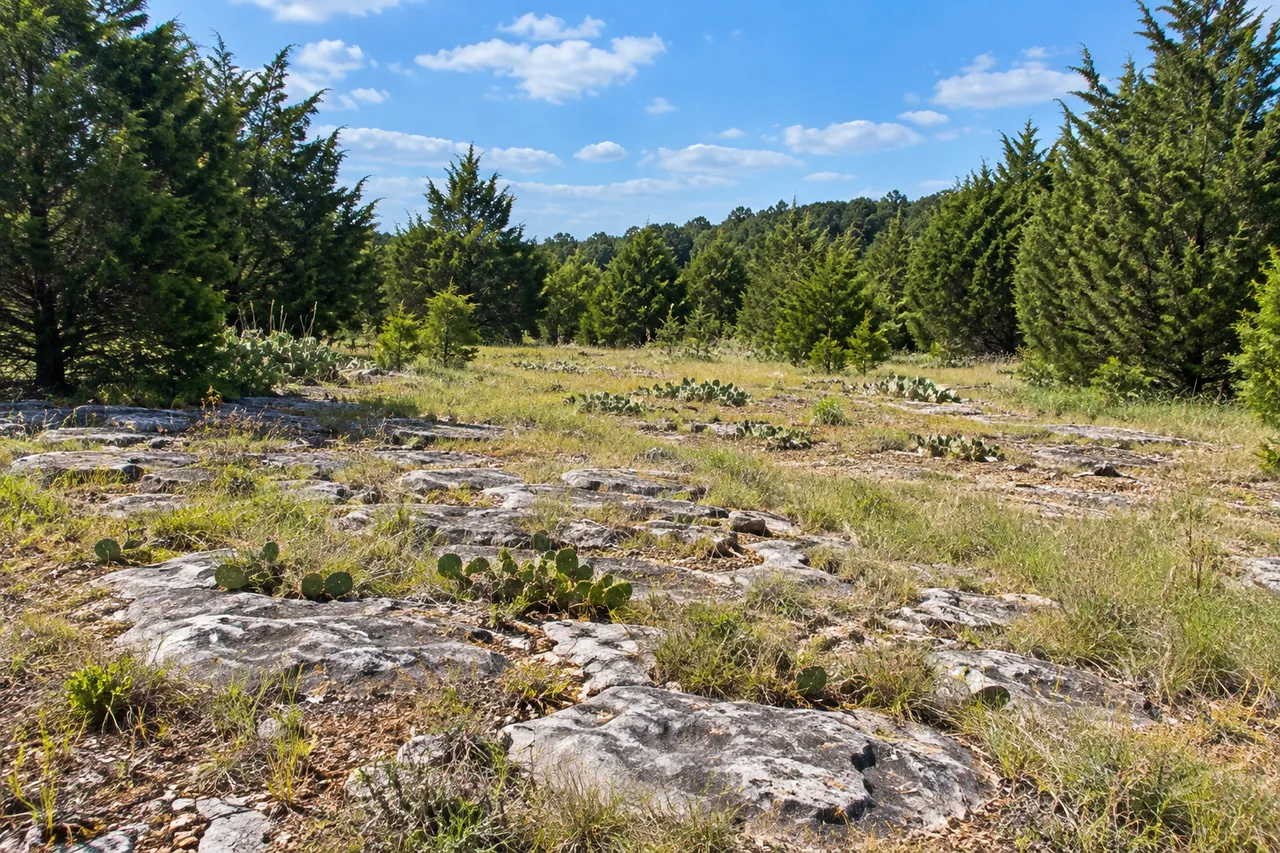
- How thick the cedar is. Scattered young cedar is quick work; a closed stand isn't. The U.S. Forest Service's redcedar review says a treeless pasture can become a closed cedar forest in as little as 30 years, so every year of waiting adds to the bill. More on cedar.
- Rock. Limestone ledges and slabs often sit close to the surface here, with chert gravel mixed in. Rock wears mulcher teeth, comes up in root balls, and slows grading.
- Slope. The Highland Rim hills toward Mount Pleasant and Hampshire are slower and more careful work. In the county, slopes of 15 to 25 percent in a building envelope need an engineered site plan, which is a cost of its own.
- Stumps out or left. Mulching leaves roots in place and generally costs well under digging stumps out; compare the mulching and dense-clearing rows above.
- Debris and where you can burn. Spring Hill's burn pages say land clearing fires are prohibited, and Columbia's land-clearing exception is limited to agricultural, forest, or game management purposes. Where burning is out, debris is mulched, ground, or hauled, and hauling costs the most.
- Creeks, sinkholes, and fences. Working around a sinkhole, keeping a stream buffer, or hand-cutting along wire you're keeping all slow the machine.
- Permits and erosion control. On construction jobs, Columbia lists a $500 land disturbance fee plus $200 per acre for plan review and inspection, and TDEC's page lists $250 for state permit coverage on 1 to under 5 acres (confirm it applies to the 2026 permit). Silt fence and seeding cost money too.
- The trip. Getting a machine to your land costs about the same whether the job is short or long, which is why small jobs often carry minimums.
Per acre, per day, or per hour?
You'll see all three. A per-acre or per-job price is easiest to compare and puts the risk of a slow day on the contractor, but it depends on how well they read the cedar and rock. A day rate or hourly rate puts that risk on you: if the ground is rockier than it looked, that's more hours. Hourly suits small or hard-to-judge jobs, and long, narrow fence rows fit per-acre pricing poorly. However it's priced, have each contractor tell you how many machine days they expect and list in writing what the price covers.
Get these in writing
- Exactly where the work happens, shown on a map or with flags, and what stays untouched: keeper trees, the septic area, sinkholes, creek buffers, steep ground.
- The method for each part: mulching, cutting and piling, or digging out.
- Stumps: left, cut low, ground, or dug out.
- Debris: mulched, hauled, or burned, and who gets the burn permit.
- How rock is handled, and whether it costs extra.
- Fences: protected, removed, or left for you.
- Whether seeding, silt fence, and erosion control are included.
- How long it should take, what an extra day costs, and the plan if it rains.
- Which of you files the Tennessee 811 ticket and any permits.
- The payment schedule, and a certificate of liability insurance. More on hiring.
Ways to bring the cost down
- Mulch the acreage and dig out only the footprint of the house, drive, and anything else you'll build.
- Clear cedar sooner, while it's young and scattered.
- Leave rock and stumps alone where nothing will be built or mowed.
- Keep the firewood instead of paying to haul it.
- Look at cost-share. NRCS's EQIP page shows an apply-by date of November 20, 2026; ask the USDA Service Center in Columbia, 931-388-1307, ext. 3. TAEP's fence-line program opens once a year in early October.
- Team up with a neighbor who has clearing to do, so one trip covers both jobs.
Questions about price
What does it cost to clear one acre in Maury County?
Using the national ranges above: Angi (September 2026) puts a lightly forested acre at $500 to $2,000 and a densely forested one at $3,600 to $5,600, and HomeAdvisor (June 2026) puts forestry mulching at $400 to $1,500 an acre. Thick cedar on rock tends to push a job up. Your own acre's price comes from someone who has walked it.
Will a small job carry a minimum?
Expect one. Trailering a machine out costs about the same for a short job as a long one, so small jobs often carry a minimum. For stumps, HomeAdvisor says many contractors set a $100 to $150 minimum for a single one.
Why are two quotes so far apart?
Usually they describe different jobs. One mulches and leaves stumps; the other digs, piles, and hauls. Compare them line by line.
Will cost-share pay for clearing?
Possibly, for farm and woods work. NRCS's Brush Management practice covers removing woody plants, including invasive ones, to improve forage. Ask the USDA Service Center in Columbia before the work starts.
How we help
Send a short request or call. One independent contractor who covers your area will get it, look over the land, and give you a written price to accept or turn down. There's no charge for the referral.
Want a local contractor to walk your land?
Call or send a short request. There's no charge for the referral.