
Brush Clearing in Maury County, TN
Brush clearing in Maury County mostly comes down to three plants: Chinese privet, bush honeysuckle, and thorny Callery pear. They wall off woods edges, fill pasture corners and fence rows, and turn hunting woods into thickets you can't walk through. Unlike cedar, privet and honeysuckle come back after they're cut, so getting rid of them is a two-step job. Here's how the clearing gets done, what the follow-up takes, where it fits on farm and hunting land, what it costs, and where to find help.
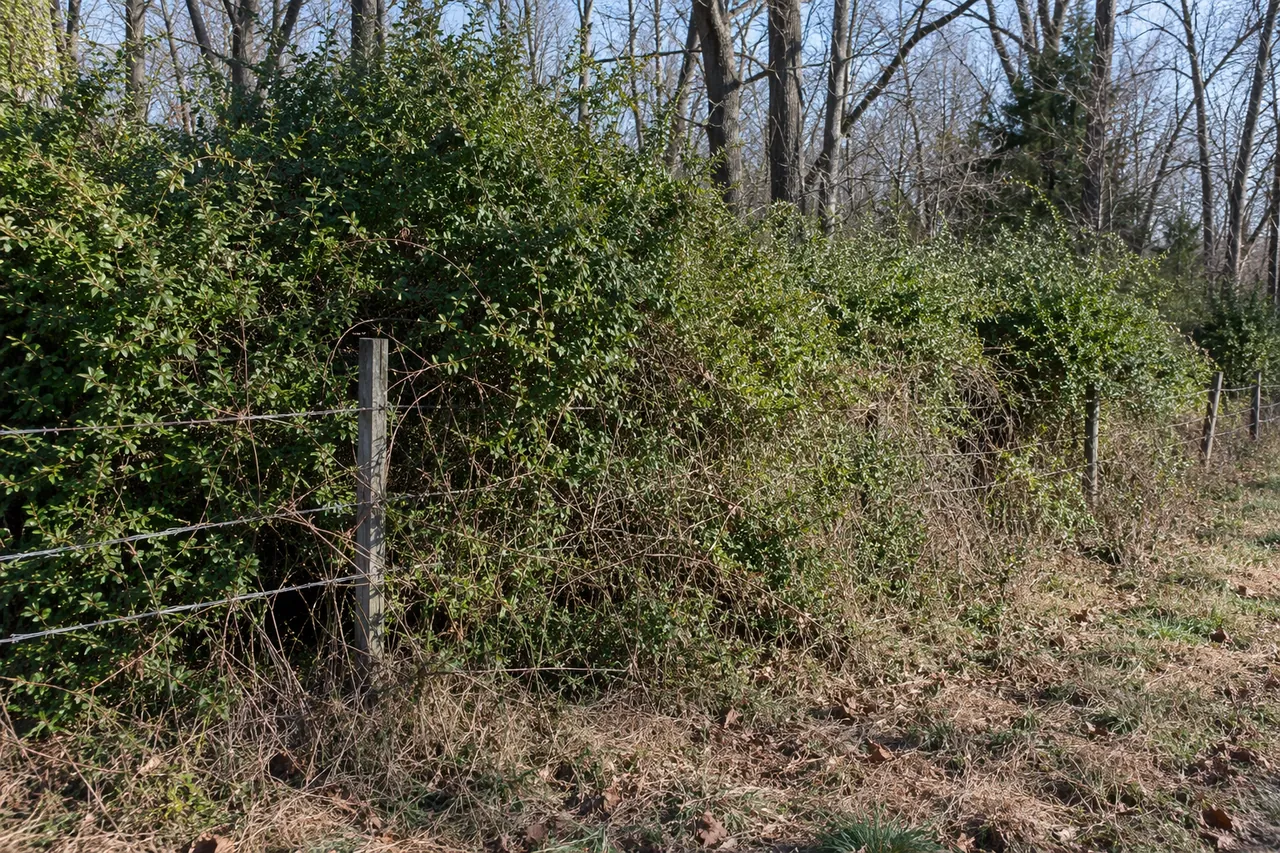
The brush that takes over here
- Chinese privet forms thickets in fence rows and woods, and sends up suckers from its shallow roots.
- Bush honeysuckle invades pasture edges and stays green long after the trees around it drop their leaves.
- Callery pear forms thorny thickets that are miserable to walk or drive through.
Old fields left alone here also grow up in sumac, black locust, and cedar. The easiest time to see how much of a problem you have is late fall and winter: with the hardwoods bare, the cedars and bush honeysuckle are about the only green left. The Tennessee Invasive Plant Council keeps a list of invasive plants in the state if you're trying to identify something.
Why it comes back
Cedar dies when it's cut. This brush doesn't. The U.S. Forest Service's review of privet says Chinese privet "apparently sprouts from the root crown in response to stem damage" and "readily produces suckers from its extensive, shallow root system," and warns that "cutting stems without accompanying herbicide treatment will likely promote growth from sprouting." The honeysuckle review says Amur (bush) honeysuckle "will sprout from adventitious buds on the root crown in response to stem damage."
In plain terms: mulch a privet thicket and walk away, and it will sprout right back. That's not a reason not to clear it. It's a reason to plan the second step before the first. For Callery pear, ask UT Extension in Columbia (931-375-5301) for current control advice.
How the clearing gets done
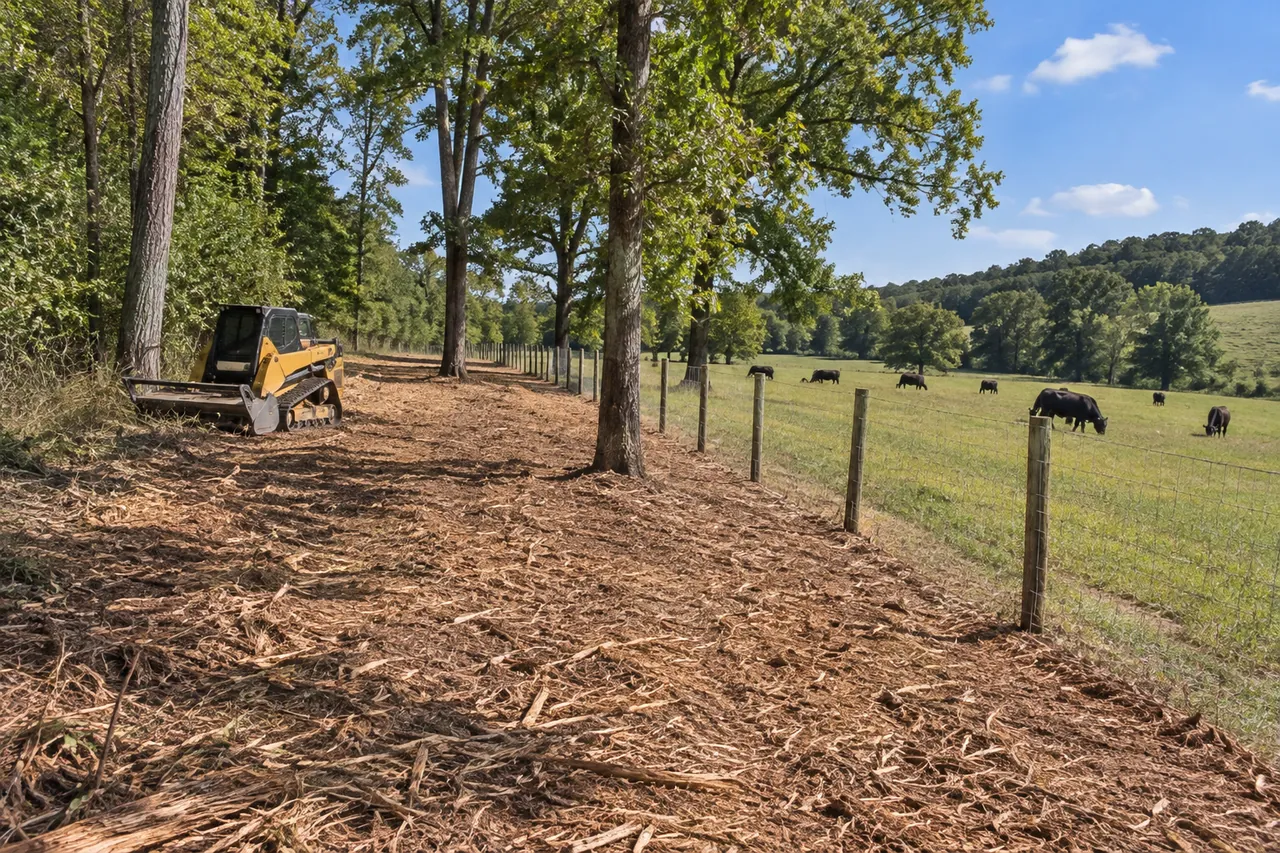
- Forestry mulching. The fastest way through a big thicket. The machine grinds brush and small trees where they stand and leaves the keepers. Roots stay in the ground, so the sprouting problem stays too.
- Cut and treat. For privet stems over an inch across, the privet review says they "may be most easily controlled by cutting close to ground level and applying herbicides to the cut stumps." Some contractors do this as they go; ask.
- Digging out. Where the ground is being disturbed anyway, such as a house site, an excavator can pull root crowns. Privet's shallow roots can still sucker from what's left.
- Saw work by hand along fences, around buildings, and near trees you're keeping.
The follow-up, which matters as much as the clearing
Plan on a year or two of work after the machine leaves. Mowing or bush hogging the cleared ground through the growing season wears the sprouts down; the honeysuckle review says repeated cutting "results in continued but diminished sprouting." Spot-treating sprouts with herbicide finishes the job faster. UT Extension in Columbia can recommend products and timing, and the label is what you follow, especially around grazing animals.
Take extra care near creeks and sinkholes. Water that runs into a sinkhole goes underground, and TDEC's karst guidance notes that polluting groundwater is unlawful whether or not a regulated well is involved. Ask Extension what, if anything, is appropriate to spray close to water.
Pasture edges, woods, and hunting land
On farm ground, brush clearing usually means taking back pasture corners and fence rows so grass and cattle can use them again. In the woods, it means clearing the privet and honeysuckle understory and leaving the oaks, hickories, walnuts, and other hardwoods worth keeping. On hunting land, it's trails, lanes, and food plots.
NRCS has practices for both. Brush Management (code 314) covers "the management or removal of woody (nonherbaceous or succulent) plants including those that are invasive and noxious." Forest Stand Improvement (code 666) is "the manipulation of tree and shrub species composition, structure, or density to achieve desired forest conditions." Cost-share runs through EQIP, which shows an apply-by date of November 20, 2026. Start with the USDA Service Center in Columbia, 931-388-1307, ext. 3 (call before going). For a plan for the woods, the Division of Forestry's Find a Forester page lists who covers Maury County.
What brush clearing costs
Most brush work is mulching, priced by the hour or the acre. HomeAdvisor's June 2026 guide lists $200 to $400 an hour for heavy, dense brush, and $125 to $200 where it's lighter underbrush and small trees. Angi's May 2026 guide puts mulching at $1,000 to $2,500 per acre. As a worked example, 2.5 acres of thicket at Angi's per-acre range comes to $2,500 to $6,250 before any follow-up treatment; the acreage is the assumption. Cut-stump treatment, hand work along fences, slope, and rock add to it. These are national figures, not Maury County prices, and the written quote from a contractor who has walked the brush is the number that counts. More on cost.
Permits and rules that can apply
- Farm and woods work is treated differently from construction under Tennessee's water rules. In the woods, the state's forestry best management practices (Rule 0080-07-03-.02) call for streamside management zones of at least 25 feet on flat ground, plus 20 feet for each additional 10 percent of slope.
- Inside Columbia, if trees come out along with the brush on anything bigger than a single-family lot of an acre or less, the city's tree protection rules may apply. The ordinance exempts tree removal for agricultural uses from part of these rules; ask Development Services, 931-560-1560, before clearing.
- Burning brush piles needs a permit in season, and rules differ in Columbia, Mount Pleasant, and Spring Hill.
The permits guide covers each one.
Brush clearing questions
Can I just bush hog it?
On small, young brush, a bush hog keeps it in check. Once privet and honeysuckle are head-high with thick stems, it takes a mulcher or saws, and after that, regular mowing is how you keep it down.
Do I have to use herbicide?
Not necessarily, but without it, plan on repeated mowing for a few seasons. Cutting alone tends to make privet sprout back. Extension can help you weigh the options.
Can the big trees stay?
Yes. A mulcher can clear the understory and leave good hardwoods standing. Flag them before the work starts.
Is it worth clearing if it grows back?
With follow-up, yes. Repeated cutting wears honeysuckle sprouts down, and treating privet sprouts keeps them from rebuilding the thicket. Without follow-up, you're paying to reset the clock.
How we help
Call or send a short request: where the brush is, roughly how much, and what you want the ground for afterward. We connect you with one independent contractor who clears brush in your part of Maury County. They walk it and give you a quote, and you decide. There's no charge for the referral.
Want a local contractor to walk your land?
Call or send a short request. There's no charge for the referral.